Bold
A parcel that's an excuse to meet up
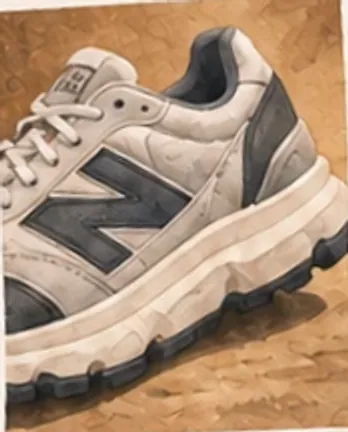
What if Answear didn't end the relationship at the doorstep, but gave people a reason to actually invite friends over in something new?
Inspiration: Brasil com S
Wally reads your client's entire category and hands you a ready interpretation: the rules of the game, the gaps, the tension and creative starters. Take it to a proposal, a pitch or a kick-off.
A full sample report right after you confirm your email. No card needed.
Report
Answear
Fashion and accessories marketplaces

This is an excerpt of this tab. You will see the full report after you create an account.
This is a real report from a scan of Answear, a Polish fashion marketplace. Click through the tabs to see what you get.
Before anyone gets to an idea, someone has to go through competitors' websites, ads, social media, comments and trade press. It should take 2 weeks, but it takes 3 days, because it is done in a rush and barely shapes the strategic direction.
So the research ends up as a few screenshots in the deck, and the creative team starts from a blank page anyway.
Client brand
Category
Competitors
A few fields, about as much as a short brief. Wally also suggests competitors worth adding.
Wally is pulling 200 sources into one page…Done. The report link is already in your inbox.
Collecting social media posts
8/8 brands done
Brand websites, ads, social media, comments, influencers, press and company financials. About 2 hours, and the report link arrives by email.
Category convention
The category acts as if the number of brands on offer proved the customer's style, though a thousand logos is just a bigger warehouse.
A thesis about the category, evidence and hypotheses for moves. Plus a source list, PPTX and Markdown export, and a link for your team.
For each of 3 directions, Wally picks 5 starters. Each one comes from a real campaign in a database of over 39,000 marketing activations.
Bold
What if Answear didn't end the relationship at the doorstep, but gave people a reason to actually invite friends over in something new?
Inspiration: Brasil com S
Pragmatic
What if Answear started from what you already have in your wardrobe, not from what you could add to the basket?
Inspiration: Cars45
Unexpected
What if Answear stopped hiding behind the algorithm and showed the real people who put the outfits together?
Inspiration: George G. Glenner Alzheimer's Family Centers
Examples from the Answear scan. The campaign database is inspiration that Wally adapts to your brand.
A Deep report has seven areas. Conclusions come with evidence, and you download source links with one click.
A synthesis in six steps. Each builds on the conclusions of the previous one.
Category convention
One sentence on what all brands' communication rests on.
Rules of the game
3 to 5 mechanisms with numeric validation, for example 4 of 6 brands, average 67/100.
Model customer
Who the whole category treats as its typical customer.
Evidence
3 to 5 pieces of evidence from brand communication that confirm the convention.
Tension
The gap between the convention's promise and a need some consumers don't get met. 8 cultural dimensions, around 220 trends.
Move hypotheses
3 directions with 5 starters each. Each starter comes from a real campaign in a database of over 39,000 activations.
Convention relation
Whether the client follows each rule of the game, with 2-3 pieces of evidence. Result: convention leader, player, partial player or outlier.
Category map
Life-cycle phase from 5 dimensions scored 0 to 3, plus a perceptual map of brands.
Communication saturation
A 0-100 topic heatmap for each brand, linguistic distinctiveness and topics where the client is in the top two.
Communication gaps
Topics one brand talks about loudly while others stay silent. Wally judges whether it's an oversight, a deliberate choice or open ground.
Hashtag landscape
Narratives and visual motifs, author tiers, an hourly heatmap, posts that break the convention. Plus accounts with 20k+ followers that don't tag any brand.
Influencers
Creators tagging brands over 3 months, in 5 tiers from nano to mega. Overlap, exclusivity and gaps: who promotes the competition rather than the client.
Comments
180 days in 6 monthly buckets. Sentiment and topic of every comment, shared pain points, engagement mirage, anomalies.
Media mentions
The last year, company and products separately. Sentiment, topic, source and date of every mention, with no duplicates.
Tactical assessment
6 metrics: channels, comments per post, number and reach of influencers, active Meta ads, sentiment. A 0-100 strength score calculated without AI.
Social media
Strategy and tone of each channel, formats, video language, a sample of posts with engagement, sales mechanisms with quotes.
Website
Screenshots of key subpages, value proposition, content structure, colours, composition, human presence.
Meta ads
Number of active ads and a reading of examples: copy, dates, spend and impression ranges where Meta provides them.
5 blocks of questions tailored to the report: what you accept, what resonates, what you know about the client, what to ignore, what's missing. Plus a deck, a script and a workshop agenda.
A deliberate attempt to disprove the main thesis: rejected signals, another reading of the same data and counter-evidence for report sections.
Quotes and observations from websites, posts and ads, filtered by brand, source and topic. The full list of links in a downloadable file.
That's the maximum set: the client brand and 7 competitors, each on 5 channels (Instagram, TikTok, Facebook, LinkedIn, YouTube), plus 5 hashtags.
What Wally collects
Per brand
Across the scan
Brand profile posts
15 from each channel, picked by engagement and recency. 75 per brand.
75
600
Comments under posts
Up to 500 from Instagram, TikTok, Facebook and LinkedIn, up to 150 from YouTube. Last 180 days. 650 per brand.
650
5,200
Search results about the brand
24 queries in Google and Google News with 10 results each, 5 YouTube videos. Last year. 245 per brand.
245
1,960
Ads from the Meta library
The brand's active ads in the scan country. 100 per brand.
100
800
Influencer posts
Instagram, last 3 months. Creators counted from 5k followers. 100 per brand.
100
800
Website subpages
Text and screenshots of the homepage and key subpages. 4 per brand.
4
32
Category hashtag posts
5 hashtags, Instagram and TikTok, up to 100 posts per hashtag and platform.
whole category
1,000
Sites of brands outside the set
25 additional brands from the category, needed for the saturation benchmark.
whole category
25
Total data points
1,174 per brand
1,174
10,417
Videos analysed as video
The model watches each video frame by frame and analyses sound and captions. 10 from Reels and TikTok and 5 from YouTube per brand, plus 150 from category hashtags. 15 per brand.
15
270
Ads read qualitatively
A sample picked from each brand's ad pool. 15 per brand.
15
120
Posts read as images
Image and caption together. They feed the category's visual conventions. 8 per brand.
8
64
Additional brands in the category
25 brands outside your set. Each, like the 8 in the set, scored 0-100 on every communication topic.
whole category
25
On top of that, the category's market context, an overview of discourse about each brand and company financials. At the end Wally matches everything against a database of around 220 trends and over 39,000 activations.
These are upper limits, not averages. A brand without TikTok or with a rarely updated profile yields less data. The largest scan so far (8 brands, 24 channels) collected 5,963 data points.

Your brand and 7 competitors on Facebook, Instagram, TikTok, LinkedIn and YouTube at once. Instead of a week of clicking through profiles, you get the whole category in one report.

We calculate the numbers from the collected data before the model starts writing. We check every quote against the source material, and a strong word about a brand stays only when comments and mentions back it up. In front of the client you defend facts, not the model's guesses.
You get an editable deck for a 15-minute presentation, the whole report in Markdown for Notion or your own AI, and raw data in CSV tables. You keep working with the report without retyping anything.

Wally builds a client workshop around the report's conclusions from 29 strategic methods, from pre-mortem to six thinking hats. You work through the research findings with the client instead of just presenting them.
Invite as many people as you need and work in parallel on shared reports and a shared pool of scans. Send the client a link to the whole report or just selected sections, no login required.

Brief, in about 45 minutes, gives a cross-section of the category with sharp observations and questions for a tissue meeting. Deep, in about 2 hours, is a full category scan with a thesis, evidence and directions for moves. You match the depth to the project stage.
Brief shows the playing field. Deep shows where on that field there's open space.
About 45 minutes, up to 2,352 data points
You're going to a client whose category you don't know yet. You find out who's playing on the field and what to ask in the first meeting.
About 2 hours, up to 10,417 data points
You're working on a proposal, a pitch or a strategy. You get the convention, the tension, directions and starters for the creative kick-off.
After a Brief, you can run a Deep on the same set of brands. It's a separate scan from your pack.
Every pack has all features. Each Deep scan comes with a free Brief.
The bigger the pack, the less you pay per scan.
One project
1Deep scan
+ 1 Brief scan free
Price before discount: 999 PLN799.20 PLN net
799 PLN per Deep scan, valid for 30 days
Small team
3Deep scans
+ 3 Brief scans free
Price before discount: 2,499 PLN1,874.25 PLN net
625 PLN per Deep scan, valid for 90 days
Whole agency
6Deep scans
+ 6 Brief scans free
Price before discount: 4,499 PLN3,149.30 PLN net
525 PLN per Deep scan, valid for 180 days
No. Wally does the desk research and hands over an initial interpretation. Strategy, the choice of direction and decisions stay with your team.
From public sources: brand websites, profiles on Instagram, TikTok, Facebook, LinkedIn and YouTube, comments, posts tagging the brand, the Meta ad library, Google and Google News, plus company financial data from public registries. You download the full list of links from the report.
AI models read the collected material: text, images and videos. They score the sentiment and topic of every comment, look for patterns in brand communication and finally assemble the conclusions into a report step by step, so that each stage builds on the previous one. The brand strength score is calculated without AI, and every conclusion comes with evidence and a source list.
You don't have to take the model's word for it, because the facts in the report can be checked at the source. Numbers such as the share of topics and sentiment in comments are calculated by the server from the label of each comment, and the model receives them as facts before it starts writing. We compare every quote in the evidence with the collected material and remove any that aren't there. Conclusions from the key modules and media mentions carry footnotes from Anthropic's Citations API that lead to a specific article or post. Finally, code checks how the material is described, for example whether a strong word about a brand is backed by the number of critical comments and mentions, and the model rewrites only the sentences the code flagged. Data gaps are shown in the report, in the scan diagnostics. Wally's thesis and point of view stay; we check the facts they stand on.
It's not about being better. First, Wally has direct access to social media channels and ads, so it works on real brand posts, comments and ads. Second, it uses several models to run the analysis and assembles their results into one report. If you want a standardised report built on the working process of a strategy expert, use Wally.
No. What you enter in Wally and your reports are not used to train language models.
No. A scan only needs context, the client brand and competitors. There's no place to upload an RFP or other client documents, and the rest of the material comes from public sources. Beyond that we store account and billing details, as described in the privacy policy.
Brief takes about 45 minutes, Deep about 2 hours. You can close your laptop, and the link to the finished report arrives by email.
Yes. Right after you sign up and confirm your email you get a full sample Deep report: Answear versus About You, Zalando and Modivo. No card and no company details needed.
Yes. Solo is valid for 30 days, Studio for 90 days and Agency for 180 days from purchase. When you buy another pack, the scans add up and the whole pool is valid until the later of the two dates.
Yes. At checkout you choose your country and enter your company details and VAT ID. Stripe adds VAT where it applies and emails you the invoice. Companies registered in Poland enter their NIP and get an invoice through KSeF. Prices on this page are net.